The Slow Craft: What Happens When You Stop Rushing
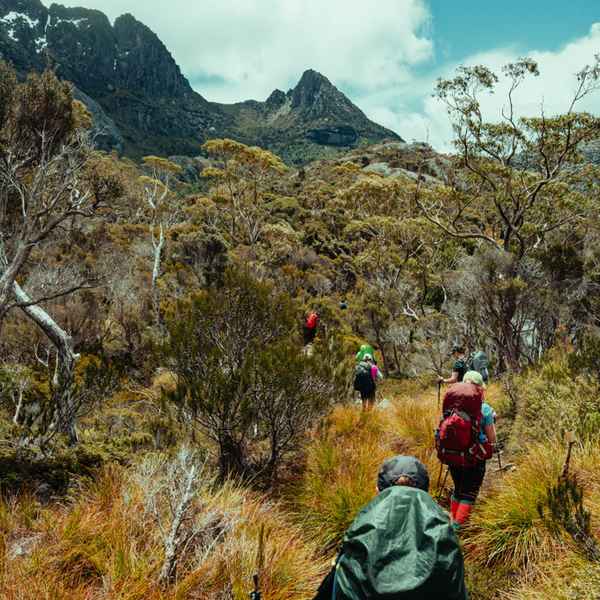
A busy modern life includes an inherent impatience: it’s the instinct to finish things quickly, to get to the result, to skip the learning part, to move onto the next thing. When Hamish Lockett started studying architecture, he learnt a golden rule that challenged this entirely: nothing good gets built fast. A structure must be read, understood, worked with, not rushed into being. Now a Tasmanian Walking Company Guide on the Overland Track, Hamish can see the same rule applied out in nature: things take time to grow, to settle, and to flourish - and the payoff is extraordinary, especially when you stop to study the sharp sparkle of dolerite columns or fluffy clusters of button grass.
 Meet Hamish...
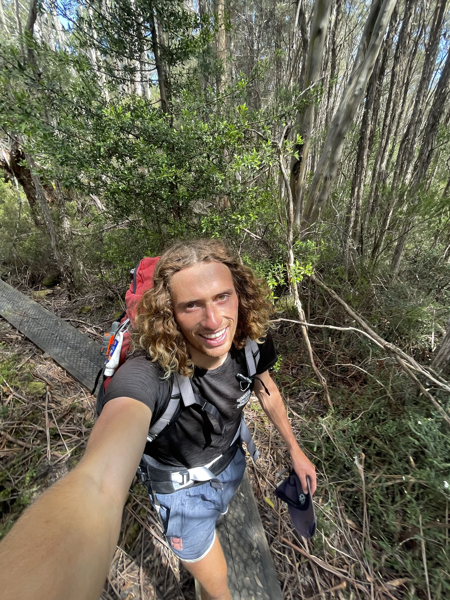
Hamish has been sharing this slow-going, nuanced natural world with Tas Walking Co guests for six years, and with a wider audience through photography for even longer - the lure of the lens is what drew him outdoors in the first place. "I started venturing out more and more, camping on mountain tops, trying to see as many cool places as possible around my backyard of Tassie," he says. It's still how he engages with the landscape on his days off, chasing wild places and "trying to do it in different ways," always looking for a slightly different angle of landscapes he's already walked a hundred times. It's a habit that mirrors what he tells nervous walkers heading toward Cradle Mountain for the first time: build up slowly, get comfortable on uneven ground, trust the process rather than rushing the result. "The trail is super doable," he says. "It just requires some fitness, and the guides are always there to support you." Guides, he laughs, who often end up best mates and planning a post-work adventure.
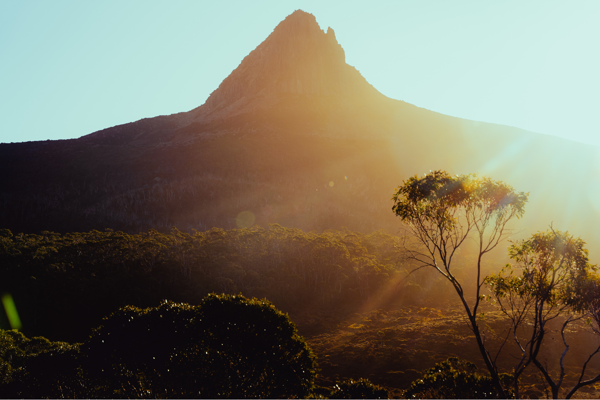 Photo credit: Hamish
The team camaraderie and the astounding surrounds are hard to beat, but the outputs from each trip that Hamish celebrates most is the transformation of guests. People arrive distracted, carrying the noise and technology of ordinary life with them, and within a day or two, all of it falls away - or runs out of battery. "Your new problem is whether to go for a swim, if you need another layer, or where the best place to look for a wombat is," he says. "Everything is dialled back. You're much more in the moment."
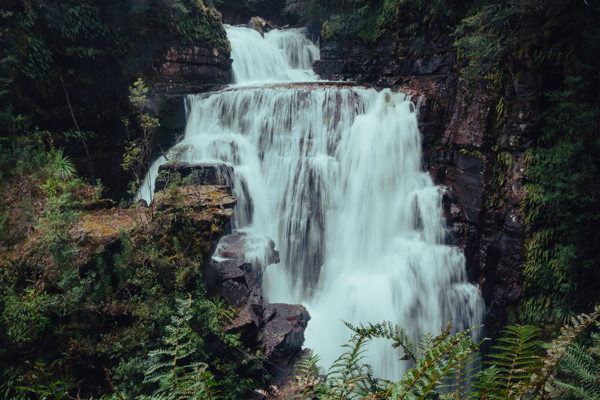 Photo credit: Hamish
Built One Coil at a Time
The craft of weaving achieves presence a different way: through process. Hanging above the expansive dining table at our private Lodge on the Uluru-Kata Tjuta Signature Walk is a suspended work of woven art, and the slow, focused time spent creating it is clear in its remarkable, patterned detail. 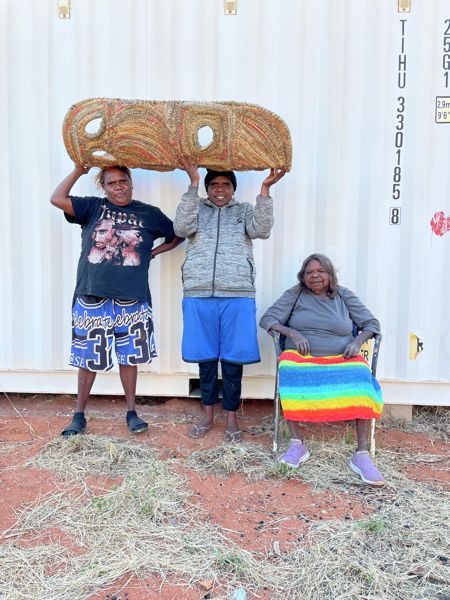
The piece is called Tjanpi Wira (2024), created by Aṉangu artists from Kaltukatjara (Docker River): Beryl Bell, Caroline Ginger, Christobell Protty, Donna Ferguson, Elfreda Tjiweri, Jocelyn Woods, Joy Jackson, Karen Watson, Leonie Bennett, Mary Gibson, Maureen Watson, Rosalind Yibardi, Sheryth Bronson and Vanessa Calma, with technical assistance from Ruby Henderson-Leconte. The artists are part of the Tjanpi Desert Weavers, a collective working across the Ngaanyatjarra Pitjantjatjara Yankunytjatjara (NPY) Lands, where coil weaving with tjanpi (wild desert grass) has grown into a contemporary creative movement since 1995. 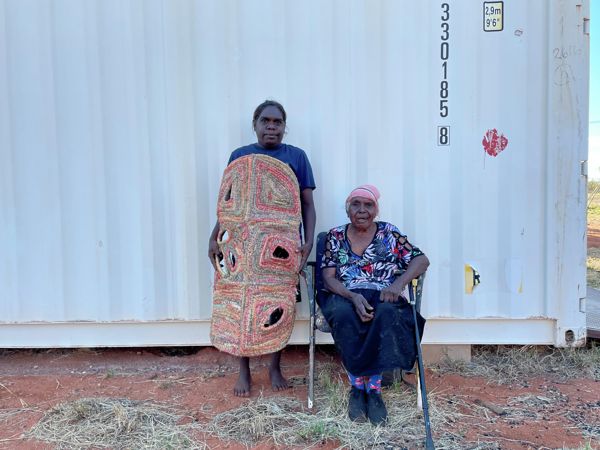
The installation’s three forms are contemporary interpretations of the wira, or coolamon, a shallow vessel traditionally carved from wood and used by Aṉangu people for generations to carry water and food. As Tjanpi Desert Weaver Kanytjupayi Benson (dec.) once explained, before the weaving movement began, "We were all wood carvers...We've been making things out of wood since time immemorial." Woven from tjanpi, merino wool and hand-dyed raffia in desert ochres and reds, each piece carries the tali (sand dune) patterns traditionally carved into these vessels, built coil by coil, with no shortcut available.
Slowing Down Doesn't Get Old
If the weavers show what slowness produces over months, sisters Michelle and Margaret showed what it can produce in just six days.
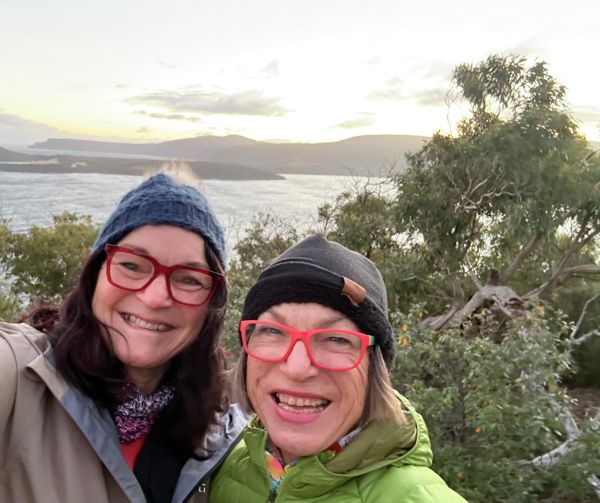
Michelle, from Launceston, had walked the Three Capes Track with us before. This time, she had her sister Margaret, a Sydneysider, beside her, and an entirely different experience waiting. "I was surprised by how much I noticed and took in," she reflects, the native plants, the wildflowers, the history shared by the guides, all of it landing with a real depth. Margaret arrived without quite registering that the Three Capes was a through-walk, pack on her back, a little heavier than she'd planned for, and found the unexpected challenge gave way to unexpected reward: lodge accommodation, she admits, far more lush than she'd imagined, arriving on day one to tea and freshly baked cake at Crescent Lodge, looking out over a view that "seemed almost too good to be real."
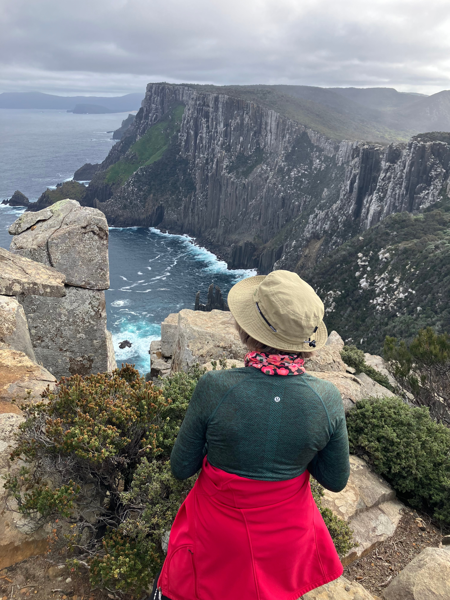
For both sisters, the days built a particular rhythm: walking, noticing, arriving, eating well (the beef cheeks on night one converted Margaret, a self-described non-meat eater, on the spot), then unwinding each evening over Tasmanian wine, swapping the day's small discoveries. By the final steps, what surfaced wasn't just satisfaction - it was gratitude. For health, for the place, and for having someone to share the slow unfolding of it with. "Be prepared to be indulged," Michelle says, when asked what advice she'd give other walkers.
The Case for Slowing Down, Properly
The lesson from an architect-turned-guide, a collective of desert weavers, and two sisters on a coastal track: slowness produces extraordinary things when you give it room. That's the case Tas Walking Co keeps making, one step at a time.
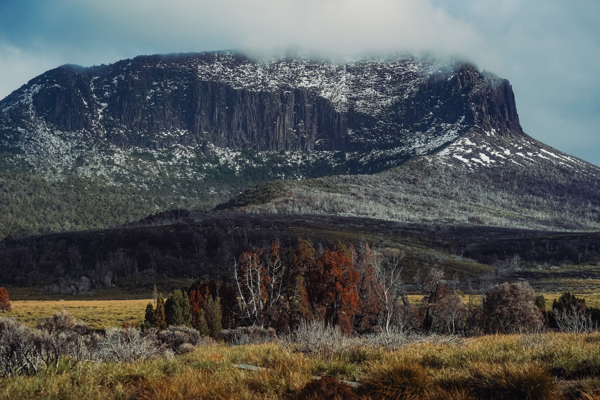 Photo credit: Hamish
Last updated 8 July 2026.